October 28, 2026
Want to Age Well? Start by Getting Stronger
Strength training isn’t just about muscle. It may be one of the best investments you can make in how well you live later.
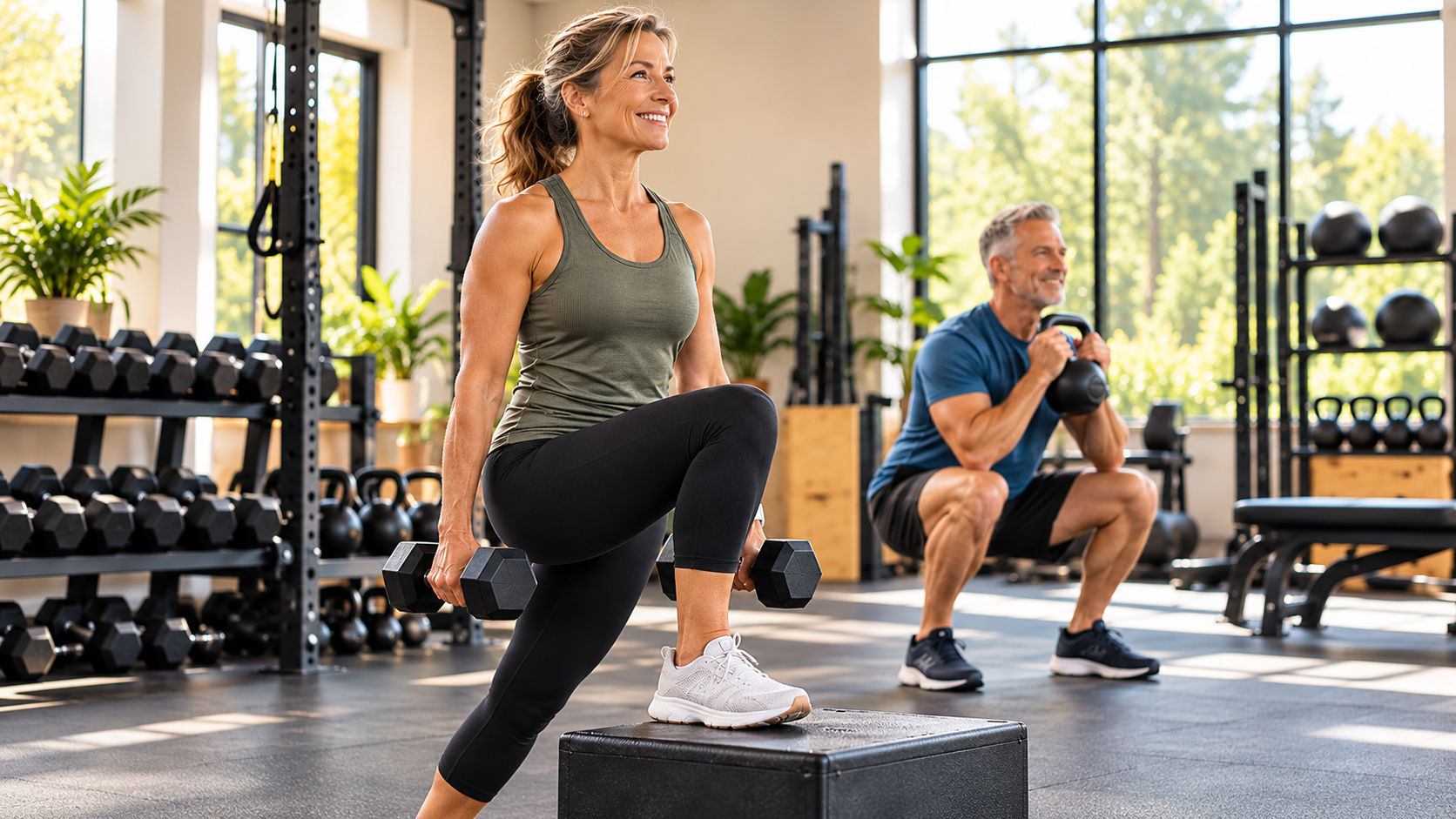
For a long time, strength training was mostly associated with bodybuilding.
Bigger arms.
Bigger chest.
More weight on the bar.
Those things are fine.
But as you get older, strength training starts to mean something much bigger.
It means being able to get off the floor without thinking about it.
Carry your own luggage.
Climb stairs without struggling.
Keep doing the activities you enjoy.
Maintain your independence.
And continue feeling physically capable well into your later years.
That’s why I think we need to stop looking at strength training as something you do simply to look better.
Strength is part of aging well.
We're Living Longer. The Question Is How Well.
There’s a lot of conversation right now about longevity.
Supplements.
Cold plunges.
Wearables.
Blood testing.
Recovery technology.
Some of those things may have value.
But I think the conversation sometimes skips over something much less exciting:
You need a body capable of carrying you through those extra years.
Living longer is one thing.
Being strong enough, mobile enough, and healthy enough to enjoy those years is another.
That’s the difference between lifespan and healthspan.
And strength training has a very important role in the second one.
Muscle Is More Than Something You See in the Mirror
Muscle affects much more than appearance.
It helps you:
- Produce force
- Stabilize your joints
- Maintain physical function
- Perform everyday tasks
- Support healthy body composition
- Remain resilient as you get older
One of the realities of aging is that maintaining muscle becomes increasingly important.
That doesn’t mean you suddenly fall apart when you turn 40 or 50.
It means there is greater value in intentionally preserving—and when possible, building—the physical qualities you want to keep.
The good news?
You can continue getting stronger and building muscle much later in life than many people realize.
Strength Is a Form of Independence
This is something I wish more people thought about.
Most of the things we associate with independence require some level of strength.
Getting out of a chair.
Carrying groceries.
Picking something up from the floor.
Putting a suitcase in an overhead compartment.
Playing with your kids or grandkids.
Maintaining your balance when you stumble.
None of those things require a six-pack.
They require physical capacity.
And that capacity doesn't appear automatically.
You train for it.
You Don't Need to Train Like a Bodybuilder
This is where some people get intimidated.
When they hear “strength training,” they picture enormous barbells, screaming lifters, and spending two hours a day in the gym.
That's not what I'm talking about.
Effective resistance training can include:
- Dumbbells
- Machines
- Cables
- Barbells
- Bodyweight exercises
- Resistance bands
The equipment matters far less than what you're doing with it.
You need enough resistance to challenge your muscles.
You need good technique.
You need exercises appropriate for your body.
And over time, you need some form of progression.
That's strength training.
You Also Don't Need to Beat Yourself Up
Another misconception is that effective workouts have to leave you destroyed.
They don't.
In fact, as you get older, training intelligently becomes even more important.
That means understanding the difference between challenging your body and simply beating it up.
A productive workout might be difficult.
But it should also be recoverable.
Your joints shouldn't constantly hurt.
You shouldn't dread every workout.
And you shouldn't need three days to recover every time you train.
The goal is not to prove how much punishment you can tolerate.
The goal is to create enough stimulus for your body to adapt—and then come back and do it again.
What About Cardio?
You should do that too.
This isn't strength training versus cardiovascular exercise.
They do different things, and both matter.
Walking, cycling, swimming, running, or other forms of aerobic activity can support cardiovascular health, conditioning, and overall fitness.
Strength training helps preserve the muscular strength and physical capacity that cardio alone doesn't fully address.
The best long-term fitness plan usually isn't choosing one side.
It's combining them intelligently.
Training for Longevity Doesn't Mean Training Carefully Forever
There's another side to this discussion that sometimes gets missed.
“Training for longevity” shouldn't become an excuse to never challenge yourself.
You're not fragile simply because you're 40, 50, 60, or beyond.
You still need resistance.
You still need effort.
You still need progression.
The exercises may change.
The amount of volume you tolerate may change.
Recovery may become more important.
But your body still needs a reason to remain strong.
Sometimes the safer choice isn't avoiding difficult things.
It's becoming physically capable enough to handle them.
What Should Strength Training Look Like After 40?
There isn't one universal program.
But the fundamentals don't suddenly change because of your birthday.
A well-designed program should generally train the major movement patterns and muscle groups while accounting for your goals, experience, injury history, and recovery.
For many adults, that means consistently training things like:
- Legs
- Hips
- Back
- Chest
- Shoulders
- Arms
- Core
You don't need dozens of exercises.
You don't need something new every week.
You need enough quality work, performed consistently, with an appropriate progression plan.
That may not sound exciting.
But it works.
Don't Wait Until You Feel Old to Start Training for Aging
This may be the most important point.
Longevity training isn't something you start at 70.
You're building that reserve now.
The strength you develop in your 40s matters.
The muscle you maintain in your 50s matters.
The habits you establish today matter.
Think of it less like trying to reverse aging later and more like building physical savings along the way.
You want something in the account when you need it.
The Goal Is Bigger Than Looking Good
I'll always understand wanting to look better.
There's nothing wrong with wanting more muscle, less body fat, or a better physique.
Those goals can be incredibly motivating.
But one of the things that changes after you've been around fitness long enough is your appreciation for what your body allows you to do.
Looking good is great.
Being strong is great.
But being 60, 70, or 80 and still able to participate fully in your own life?
That's a pretty good goal too.
Final Thoughts
There are plenty of complicated things you can do in the name of longevity.
Before worrying about all of them, make sure you're doing the basics.
Lift weights.
Stay active.
Do some cardiovascular exercise.
Eat well.
Recover.
And keep showing up.
Because when it comes to aging well, strength isn't just something impressive to have.
It's something useful to keep.
Looking for Personal Training in Nashville?
If you want to become stronger, improve your body composition, and build the kind of fitness that serves you for years—not just the next few months—I'd be happy to help.
My approach to personal training in Nashville is built around individualized strength training, smart progression, and creating a program that fits your body, goals, and life.
If you'd like to talk about where you are now and where you'd like to go, schedule a consultation and let's build a plan for it.