September 16, 2026
Can You Lose Fat & Build Muscle?
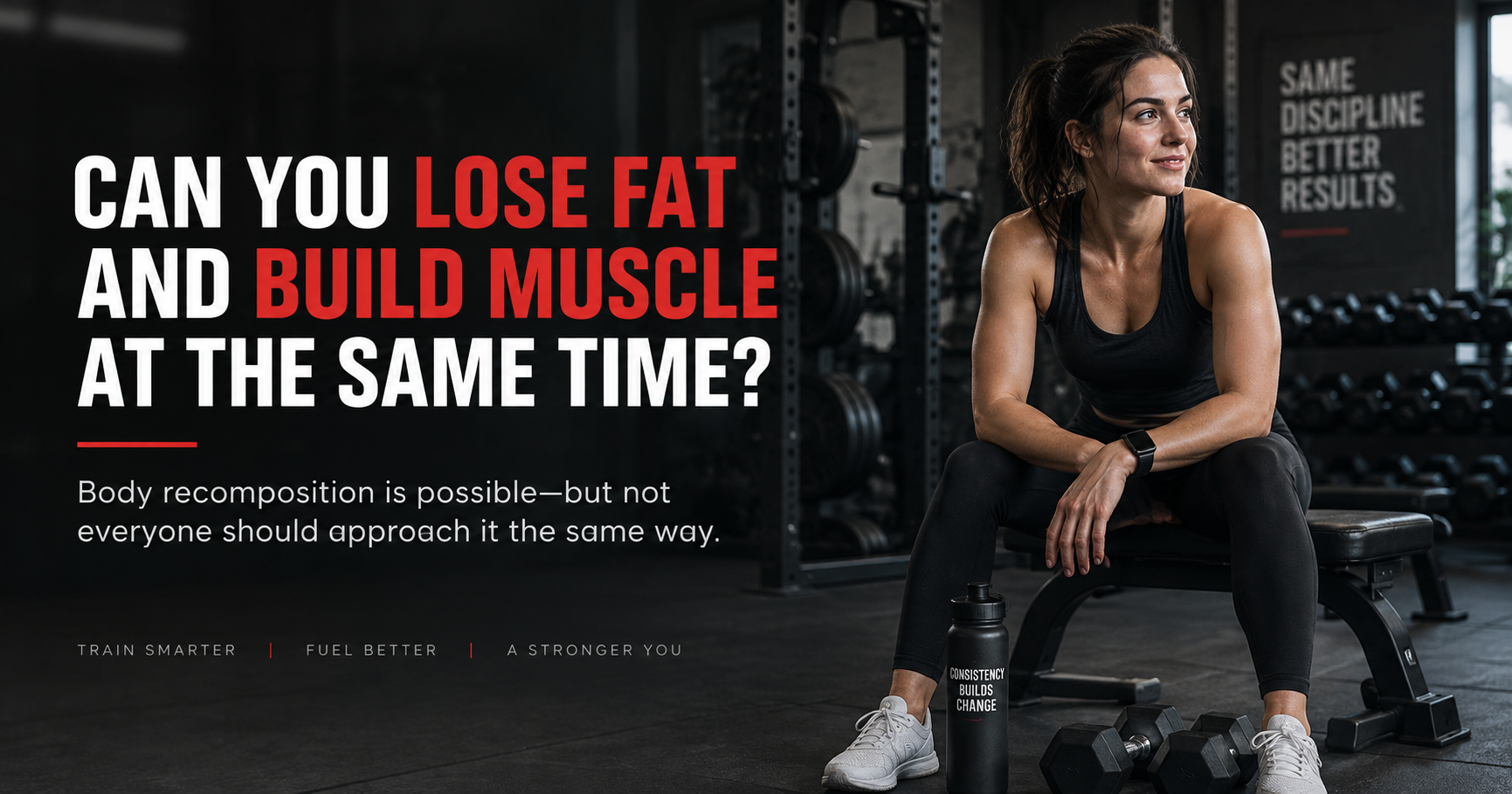
Body recomposition is possible—but not everyone should approach it the same way.
Most people assume fitness goals have to happen in separate phases.
First, lose the fat.
Then, build the muscle.
Or:
Eat more to gain muscle.
Then diet later to get lean.
There are certainly times when separating those goals makes sense.
But there is another possibility:
You can sometimes lose fat and build muscle at the same time.
It’s called body recomposition.
And while it isn’t magic, it is absolutely possible under the right circumstances.
The key is understanding who is most likely to achieve it—and what actually makes it work.
What Is Body Recomposition?
Body recomposition simply means improving the ratio of muscle to body fat.
Instead of focusing only on making the number on the scale go down, the goal becomes:
- Losing body fat
- Maintaining or gaining muscle
- Improving strength
- Looking noticeably leaner
That distinction matters.
Because losing weight and improving your body composition are not always the same thing.
If you lose 15 pounds but lose a significant amount of muscle along with it, the result may not be what you expected.
The scale moved. But your physique may not have improved nearly as much as it could have.
Who Is Most Likely to Build Muscle While Losing Fat?
Body recomposition tends to work particularly well for a few groups.
People Who Are New to Strength Training
If you have never trained seriously before, your body has a lot of room to adapt. A good strength-training program can produce relatively rapid improvements in strength and muscle while nutrition helps reduce body fat.
People Returning After Time Away
If you trained consistently in the past but have been away from the gym, regaining lost muscle can happen relatively quickly once you start training again. This is often referred to as muscle memory.
People Carrying More Body Fat
Someone with more stored body fat generally has more energy available while dieting. With appropriate training, protein intake, and a reasonable calorie deficit, gaining or regaining muscle while losing fat can be realistic.
Experienced Lifters
This is where things get more difficult. The closer you get to your genetic potential—and the leaner and more experienced you become—the harder it is to maximize muscle gain while simultaneously dieting.
That doesn’t mean body composition can’t improve. It means the rate of progress tends to slow, and more focused muscle-building or fat-loss phases may eventually make more sense.
Strength Training Has to Be the Foundation
If you want to keep—or build—muscle while losing fat, resistance training needs to provide a reason for your body to keep that muscle.
That means your workouts should still be focused on performance.
You should be trying to maintain or improve things like:
- Strength
- Repetitions
- Technique
- Training quality
- Exercise performance
This is where people sometimes make a mistake. They decide they want to lose fat, so their entire training style changes. Heavy, productive strength training disappears. Everything becomes:
- Circuits
- High repetitions
- Short rest periods
- More sweating
- More cardio
But fat loss does not require turning strength training into cardio.
If muscle preservation matters, continue training your muscles like you want to keep them.
Protein Becomes Especially Important
Protein provides the raw material your body needs to maintain and build muscle. During a fat-loss phase, adequate protein becomes even more important because you're also eating fewer total calories. You don't need to obsess over protein at every meal. But consistently getting enough throughout the day matters.
For many active adults, a useful general range is roughly 0.7–1.0 grams of protein per pound of goal or lean body weight, depending on the individual and how aggressive the calorie deficit is. More is not automatically better. But chronically eating too little can make maintaining muscle much harder.
Don't Make the Calorie Deficit Too Aggressive
This is another common problem. Someone decides they want to get lean and immediately slashes calories. The scale drops quickly.
So they assume the plan is working perfectly. But faster weight loss is not always better weight loss.
If calories are too low:
- Training performance can decline
- Recovery can suffer
- Hunger increases
- Fatigue increases
- Muscle retention becomes harder
If body recomposition is the goal, a moderate calorie deficit is usually much more useful than starving yourself. You want enough of a deficit to encourage fat loss without making productive training nearly impossible.
Cardio Helps—but It Isn't the Main Event
Cardio can absolutely be part of a body recomposition plan.
It helps with:
- Cardiovascular fitness
- General health
- Work capacity
- Energy expenditure
But you don't need hours of cardio every week just because you want to lose fat. Often, simply increasing daily movement and adding a reasonable amount of structured cardio is enough.
Strength training keeps its priority.
Nutrition creates most of the energy deficit.
Cardio supports the process.
The Scale May Not Tell the Whole Story
This is where body recomposition can become frustrating if your only measurement is body weight.
Imagine losing four pounds of fat while gaining two pounds of muscle. The scale only shows a two-pound loss. That might seem disappointing. But your body composition has changed considerably more than the scale suggests.
That's why it can help to track other markers:
- Waist measurements
- Progress photos
- Clothing fit
- Gym performance
- Body weight trends over time
No single measurement tells the whole story.
How Long Does Body Recomposition Take?
Usually longer than people want it to.
That's the truth.
Body recomposition is not a six-week transformation challenge. Muscle builds slowly. Fat loss should usually happen at a controlled rate. And meaningful changes accumulate over months of consistent training and nutrition.
That's also why the approach works so well for people who stop chasing deadlines and start thinking long term.
When Should You Focus on One Goal Instead?
Trying to build muscle and lose fat simultaneously is not always the best strategy. There are times when a dedicated phase makes more sense.
If you're already relatively lean and want to add significant muscle, you may benefit from eating at maintenance or in a small calorie surplus.
If you have a significant amount of fat to lose, putting more emphasis on fat loss may be the priority.
If you're an advanced lifter trying to maximize muscle growth, a dedicated muscle-building phase may produce better results.
The right strategy depends on where you are now. Not what somebody else on social media is doing.
Final Thoughts
So, can you lose fat and build muscle at the same time? Yes. But the circumstances matter.
For many beginners, returning exercisers, and people with body fat to lose, body recomposition can be a very realistic goal.
The formula isn't complicated:
- Strength train consistently
- Eat enough protein
- Use a reasonable calorie deficit
- Stay active
- Recover well
- Give the process enough time
The difficult part isn't discovering a secret. It's executing the basics consistently enough for them to work.
Looking for Personal Training in Nashville?
If your goal is to get leaner while becoming stronger and maintaining muscle, your training and nutrition need to work together.
That's something I help clients with through individualized personal training in Nashville.
Rather than simply chasing a lower number on the scale, we'll build a plan around improving your strength, body composition, and long-term results.
If you'd like to discuss where you are now and the best approach for your goals, schedule a consultation and let's talk.